
Industrial Curing Oven Requirements Across Aerospace, General Industry, and Heavy Equipment Manufacturing
In modern finishing operations, coating performance depends not on proper application but also on effective curing. An industrial curing oven ensures that coatings achieve the chemical and mechanical properties required for durability, corrosion resistance, and long-term performance.
Across industries such as aerospace, general industry, and heavy equipment manufacturing, curing requirements vary significantly. Differences in part size, coating materials, throughput expectations, and regulatory standards influence how curing systems must be designed and integrated into production lines.
Because of these factors, selecting the right industrial curing oven requires careful consideration of thermal control, airflow design, throughput capacity, and system reliability.
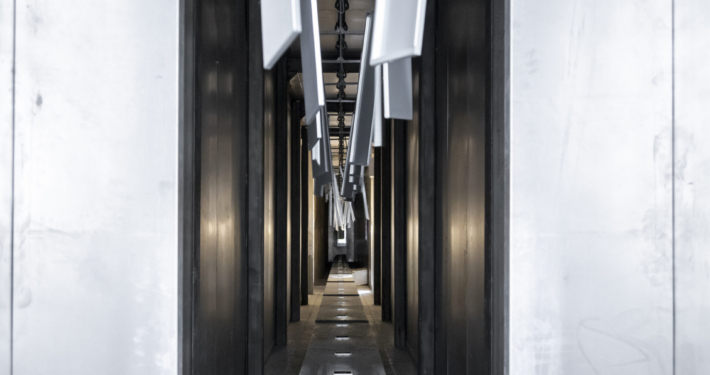
The Role of Industrial Curing Ovens in Finishing Systems
An industrial curing oven is responsible for bringing coated parts to the correct temperature and maintaining that temperature long enough for the coating to cure properly. This process ensures that coatings develop the adhesion, hardness, and chemical resistance required for demanding industrial environments.
Improper curing can lead to coating defects such as poor adhesion, inconsistent surface appearance, or reduced corrosion protection. For manufacturers operating at high production volumes, even small variations in curing performance can affect product quality and throughput.
As a result, curing ovens must provide consistent heat distribution and reliable process control across the entire production line.
Aerospace Manufacturing: Precision and Process Control
Aerospace manufacturing requires strict process control due to regulatory standards and demanding operating environments. As a result, industrial curing ovens must deliver highly controlled thermal conditions to ensure coating reliability.
Key requirements include:
- Uniform heat distribution to ensure coatings cure consistently across complex geometries and sensitive components.
- Engineered airflow patterns that prevent temperature gradients and maintain stable curing conditions.
- Advanced control systems that allow engineers to monitor and maintain precise curing parameters.
- Process monitoring and data traceability to support documentation and compliance requirements.
Heavy Equipment Manufacturing: Large Parts and Durable Coatings
Similarly, heavy equipment manufacturers process large structural components that require durable coatings capable of withstanding harsh operating environments.
Industrial curing ovens designed for these applications typically include:
- Large curing chambers capable of accommodating oversized components.
- Robust conveyor systems that support heavy or irregularly shaped parts.
- High-capacity airflow circulation to ensure even curing across thick-walled components.
- Strong thermal recovery systems that maintain stable temperatures when large parts enter the oven.
Ultimately, maintaining consistent curing conditions ensures coatings perform reliably in demanding industrial environments.
Key Design Factors for Industrial Curing Ovens
Although curing requirements differ across industries, several engineering principles apply to nearly all industrial curing oven systems.
Key design considerations include:
- Uniform heat distribution to ensure coatings cure consistently across all parts.
- Engineered airflow systems that eliminate temperature gradients within the oven chamber.
- Stable conveyor and part-handling systems that maintain predictable dwell times.
- Energy-efficient thermal management to reduce operating costs.
- Process monitoring and control systems that provide visibility into curing performance.
When these elements are carefully engineered, curing ovens can maintain both quality and throughput across high-volume production environments.
Integrating Curing Systems into Automated Finishing Lines
Curing ovens do not operate in isolation. Instead, they function as part of a larger finishing system that includes surface preparation, coating application, and material handling.
When these stages are properly integrated, parts move smoothly between each step of the finishing process. This coordination helps maintain production flow while ensuring coatings receive the correct curing profile.
In addition, automated control systems can synchronize oven operation with upstream and downstream equipment. As a result, manufacturers maintain consistent line speeds while preserving
Sustaining Performance in Demanding Manufacturing Environments
As aerospace, general industry, and heavy equipment manufacturers increase production, finishing systems must deliver both reliability and consistent performance. An industrial curing oven that maintains stable thermal conditions ensures coatings meet quality standards while supporting continuous production.
Well-engineered curing systems reduce process variation, improve coating performance, and help manufacturers maintain efficient finishing operations.
KOCH Finishing Systems designs and engineers automated finishing systems that integrate industrial curing ovens with advanced material handling, coating application, and process control. Through integrated engineering and system expertise, KOCH helps manufacturers maintain reliable curing performance while meeting modern production demands.
Contact KOCH Finishing Systems to explore finishing solutions designed for your production environment.


