
Industrial Plating Systems for Metal Finishing Lines
Metal finishing operations run on tight tolerances and tighter schedules. Even so, a single process variable drifting out of range can push an entire industrial plating run toward failure. A deposit that measures short on thickness passes visual inspection. Then it fails a salt spray test. For manufacturers plating at volume, that gap is not a minor quality issue but a systemic risk. Industrial plating has evolved significantly over the past two decades as manufacturers push for tighter process control, higher throughput, and greater traceability. Modern automated lines do more than move parts through a tank sequence. Depending on the application and customer requirements, these systems may integrate advanced controls platforms, such as KOCH Smart software, to coordinate chemical control, hoist programming, rectifier management, and real-time process tracking within a centralized interface. As a result, manufacturers can achieve greater process consistency across shifts and operators. Understanding what drives that consistency starts with the process itself.
.
Industrial Plating Process Types and Their Requirements
Industrial plating covers many electrodeposition processes. Each one serves different performance needs. Each one also requires a different system design approach. For example, zinc plating protects fasteners, brackets, and structural components from corrosion. As such, it’s one of the most cost-effective options available. Meanwhile, nickel plating builds hardness and wear resistance for precision parts in automotive and aerospace work. Copper plating improves conductivity and adhesion in electronics. Hard chrome delivers hardness and corrosion resistance for hydraulic parts, molds, and tooling.
.
Beyond performance, each process also has distinct chemistry needs. Zinc lines run at moderate temperatures with alkaline or acid bath formulations. Hard chrome lines need precise temperature control and high current density. They also require robust ventilation and air handling systems to manage process emissions and maintain a safe operating environment. Nickel lines are sensitive to organic contamination. Because of this, they need effective filtration to keep the bath clean. The engineering team must account for all of these factors from the start.
Rack vs. Barrel: Choosing the Right Approach
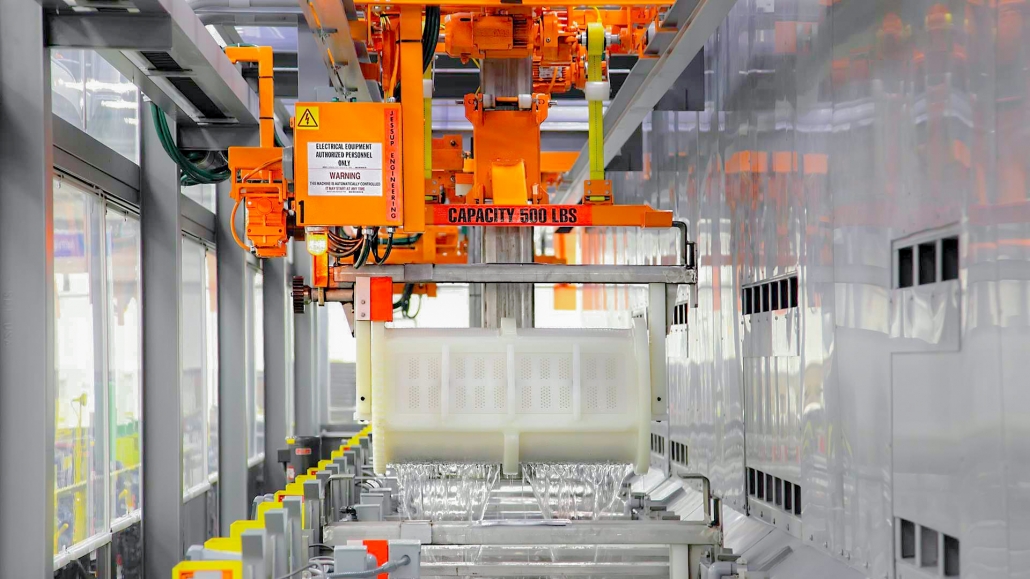
Part geometry and production volume determine whether rack or barrel plating fits the job. Knowing the difference helps manufacturers make smarter investment decisions. For example, rack plating holds individual parts on custom fixtures. It moves them through the process sequence as a controlled load. This approach works well for larger, more complex parts. Coating uniformity, surface contact, and part protection are all easier to manage on a rack line. Aerospace brackets, automotive stampings, and precision machined parts are common candidates.
.
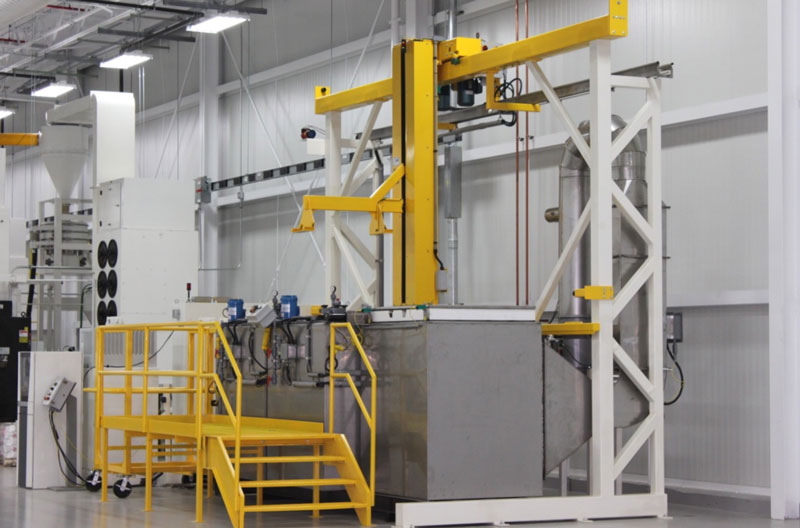
Meanwhile, barrel plating loads small parts into a rotating barrel. The barrel tumbles them through the process chemistry. This method handles high volumes of fasteners, pins, washers, and connectors well. It also removes the need to fixture each part individually. However, part geometry must work with the tumbling action. Fragile parts or those with deep recesses may not be good candidates for barrel processing. Choosing between the two requires a careful look at part geometry, production volume, specifications, and cycle time.
.
Automation and Process Control in Plating Lines
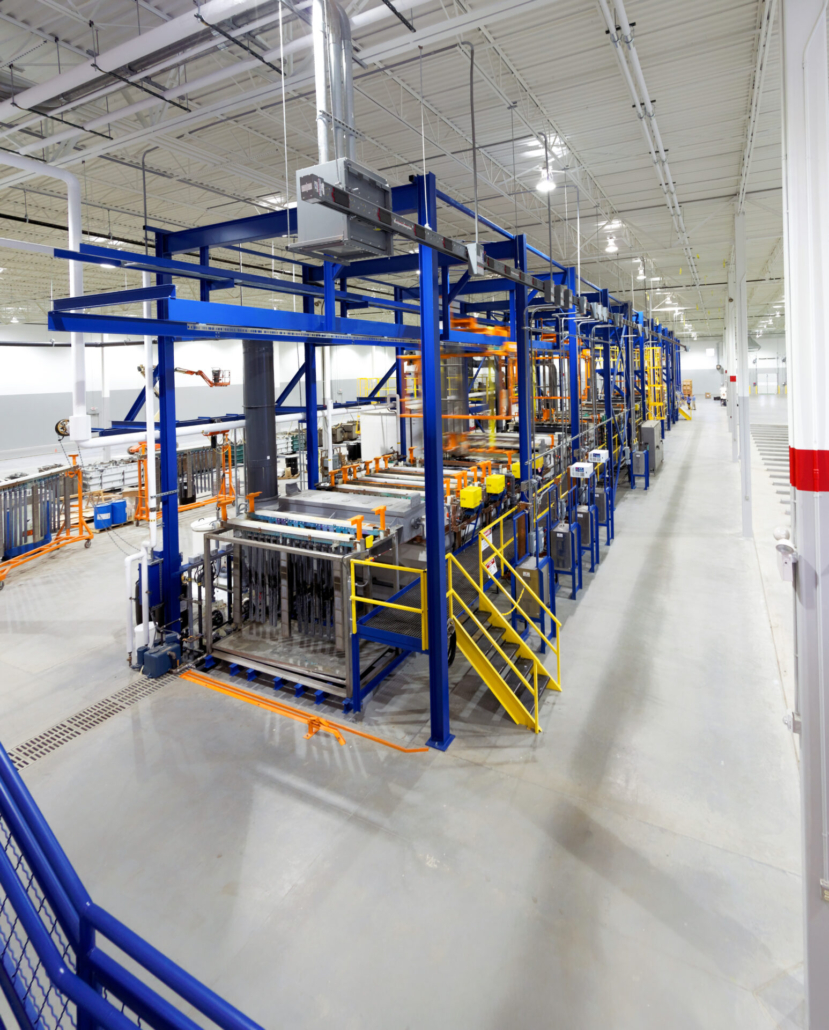
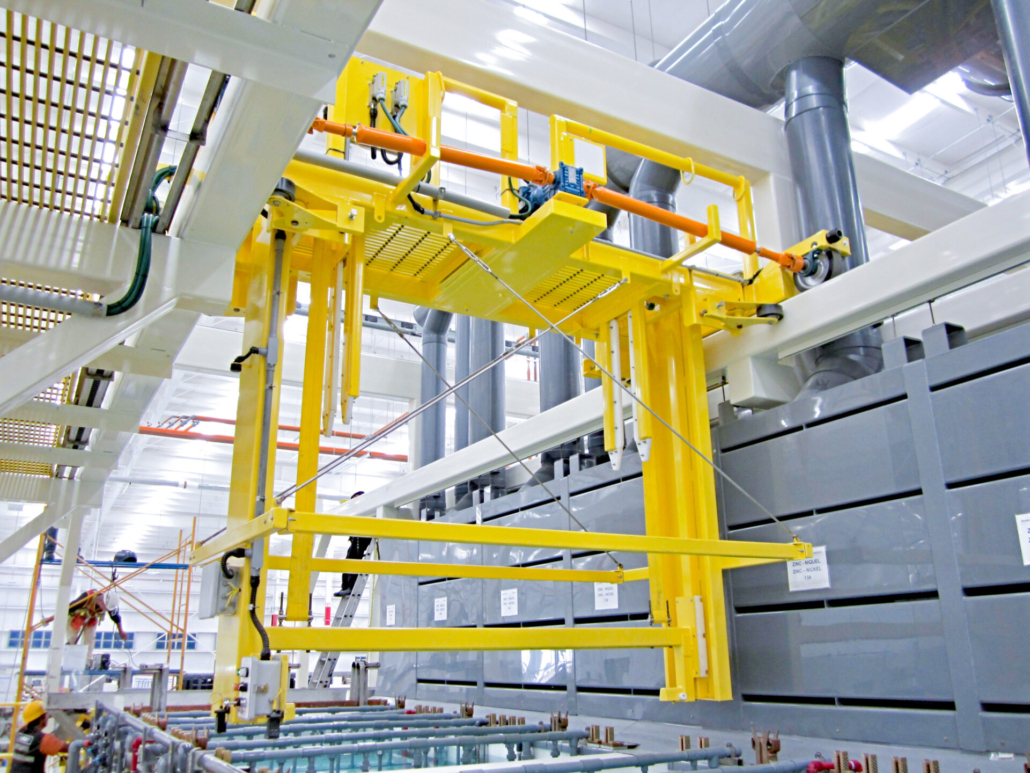
Manual plating lines depend on operator judgment. Cycle times, bath additions, and hoist movements all rely on human decision-making. That introduces variability that is hard to control and harder to document. Automated industrial plating systems solve this by running programmed sequences. Those sequences run the same way on every shift, with every operator. When integrated into an automated plating system, KOCH Smart software can track rectifier output, bath temperature, solution level, and chemical concentration while enforcing standardized process recipes across the line. When a parameter moves out of range, the system alerts the operator immediately and, when configured, triggers corrective action automatically. This level of control reduces reject rates, extends bath life, and generates audit-ready records with full traceability for every production run.
.
Consistent parameter management is one of the strongest tools manufacturers have for cutting scrap on high-volume plating lines. For aerospace and defense suppliers, moreover, this documentation is a hard requirement. Traceability records, process logs, and rectifier data all belong in a compliant quality management system.
.
Regulatory Compliance in Industrial Plating Operations
Regulatory compliance is a critical factor in industrial plating system design. Plating chemistry carries serious environmental obligations. Hexavalent chromium, cadmium, and cyanide-based baths fall under EPA regulation. Many face growing restrictions as trivalent and cyanide-free alternatives become more available. Wastewater from plating lines must go through treatment before discharge. That means removing dissolved metals and adjusting pH to meet permit limits.
.
A well-designed industrial plating system builds wastewater treatment in from the start. Rinse water recovery, drag-out reduction, and chemical treatment all lower the volume and concentration of regulated substances in the effluent. Facilities that plan for compliance during system design avoid expensive retrofits later.
.
Engineering a Complete Solution with KOCH Finishing Systems
KOCH Finishing Systems engineers complete industrial plating systems for rack and barrel applications across automotive, aerospace, defense, and general industrial markets. Every system starts with the requirements of the specific application. Process chemistry, tank configuration, hoist systems, rectifiers, and wastewater treatment all factor into the design from day one. KOCH’s engineering team supports customers from initial concept through commissioning.
.
To learn more about how KOCH approaches finishing system delivery, or to discuss your plating application, contact KOCH Finishing Systems directly.


