
Anodizing Systems Built for High-Performance Industrial Applications
Aluminum holds a well-earned place in aerospace, defense, and industrial manufacturing. What demands more attention is what happens to that aluminum surface once it enters service. Without a durable protective layer, the metal can corrode, wear, and degrade in ways that affect its performance and compliance. Anodizing solves this by converting the aluminum surface into a hard, integrated oxide layer that resists wear, corrosion, and thermal stress. For manufacturers that work with aluminum at volume, the quality of their anodizing system determines the quality of their finished product. Selecting the right system usually requires more than picking a tank size. It also requires a clear understanding of process chemistry, part geometry, production volume, and regulatory obligations. Early engagement with industry experts in chemistry, process and equipment will prevent costly challenges after production has begun. The sections below cover the key considerations that go into a well-designed anodizing line.
.
What Anodizing Does to Aluminum
Anodizing is an electrochemical process. It converts the aluminum surface into aluminum oxide. Unlike paint or plating, that oxide layer grows into the metal rather than sitting on top of it. As a result, it will not peel or flake under normal service conditions. The finished surface is harder than bare aluminum, electrically non-conductive, and receptive to dye or sealant treatments. The most common industrial process is Type II sulfuric acid anodizing. It produces a clear or dyed oxide layer suitable for architectural and general industrial applications. Meanwhile, type III, or hardcoat anodizing, produces a thicker and denser layer. Aerospace, defense, and heavy-wear applications use it where abrasion resistance is critical. Both processes require precise control of bath temperature, current density, acid concentration, and cycle time.
.
Pretreatment: The Foundation of a Quality Anodizing System
Consistent anodizing starts before the part ever enters the process tank. Pretreatment removes oils, oxides, smut, and surface contamination from the aluminum. It typically involves an alkaline clean, an acid etch, and a desmut step. However, each stage requires its own process tank with dedicated rinse stages between them. The quality of pretreatment directly affects the oxide layer. Contamination that survives this stage causes spotting, streaking, and uneven coating thickness. In aerospace and defense applications, coating uniformity is a specification requirement and not a cosmetic preference. Consequently, pretreatment failures translate directly into rejected parts and lost profits. Automated systems that control pretreatment chemistry, temperature, and immersion time produce far more consistent results than manual operations.
System Design for Automated Anodizing Lines
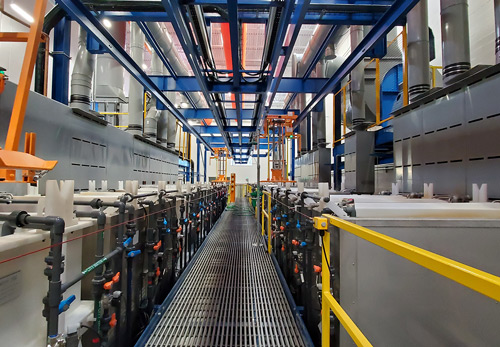
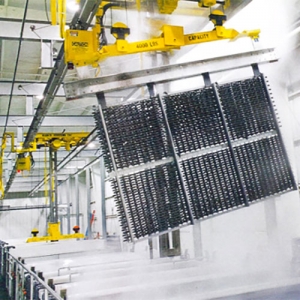
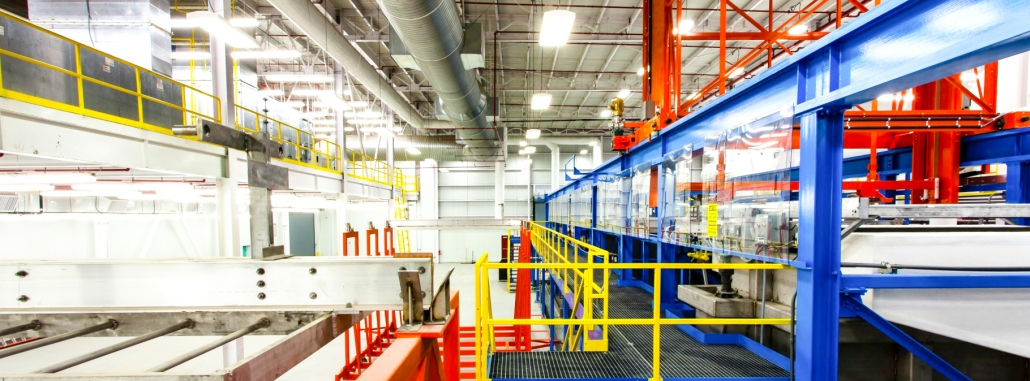
In high-specification environments, even minor process variation leads directly to coating defects, rejected parts, and lost production time. Automated anodizing lines eliminate that risk by holding every process variable within defined tolerances on each cycle. Temperature swings, inconsistent rack contact, and variable immersion times are common sources of variation that automation is designed to control. A well-designed automated line integrates process tanks, rectifiers, material handling equipment, chemical dosing systems, and controls into one coordinated system. Hoist systems move parts through pretreatment, anodizing, rinsing, and sealing stages at programmed intervals. Rectifiers maintain consistent current density regardless of load. Controls monitor bath chemistry continuously and flag deviations before they affect output. Line layout also matters for high-volume operations. Tank sequencing, hoist travel speed, and rack design all influence throughput. A well-engineered line maximizes production density without sacrificing process control.
.
Compliance and Sustainability
Anodizing generates wastewater containing sulfuric acid, aluminum ions, and in some cases, chromic acid residues. Regulatory requirements for discharge are strict and continue to tighten. EPA standards and state-level rules govern metal concentrations and pH levels in treated effluent. Consequently, facilities that fall out of compliance face fines and production stoppages. Modern anodizing systems address this at the design stage. Drag-out reduction features minimize the chemistry carried between tanks. Rinse water recovery systems lower total water consumption. Integrated wastewater treatment equipment neutralizes and filters effluent before it leaves the facility. These are not optional features for a compliant operation. They are design and regulatory requirements.
.
Aerospace and Defense Considerations
Aerospace and defense manufacturers work within specification frameworks that allow very little variation. One of the most referenced standards in this space is MIL-A-8625, a U.S. military specification that governs anodic coatings for aluminum and aluminum alloys. It defines minimum requirements for coating thickness, hardness, and corrosion resistance across Type I, Type II, and Type III processes. Manufacturers supplying components to defense and aerospace programs must demonstrate compliance with this standard. Meeting these requirements requires more than process knowledge. It requires anodizing systems designed for tight process control at every stage. Precise regulation of current density, bath chemistry, and temperature is essential to achieve uniform coating thickness and repeatable performance. Automated material handling also plays an important role by maintaining consistent immersion times and protecting part integrity throughout the line. For manufacturers pursuing certifications such as AS9100 or NADCAP, these system capabilities are not optional. They are necessary to maintain approval status and compete for high-specification work.
.
Working with KOCH Finishing Systems
KOCH Finishing Systems engineers, designs, fabricates, installs and commissions automated anodizing systems for aerospace, defense, building products, and general industrial manufacturers. Every system is built around the specific requirements of the application. Part geometry, production volume, specification requirements, and facility constraints all shape the design. From tank configuration and hoist systems to rectifier sizing and wastewater integration, KOCH delivers complete anodizing lines built for long-term performance.
.
For custom solutions for your specific anodizing requirements, contact us directly here and we’ll be happy to collaborate.


