
Design Considerations for Industrial Wastewater Treatment Systems in Metal Finishing Operations
Metal finishing plants generate wastewater on every production cycle. Pretreatment baths, process tanks, and rinse stages all contribute to an effluent stream that carries dissolved metals, acids, and regulated substances. Before that water leaves the facility, it must meet strict discharge standards. Industrial wastewater treatment systems handle that obligation. For finishing operations that plate, anodize, or apply electrocoat at volume, a well-designed treatment system is not a support function. A poorly designed industrial wastewater treatment system creates compliance risk. It also drives up operating costs and can force production shutdowns when permit violations occur. A well-designed system, on the other hand, handles variable loads, maintains consistent effluent quality, and supports the facility’s long-term sustainability goals. Getting the design right starts with understanding the regulatory framework and the treatment processes that apply to metal finishing operations.
The Regulatory Framework for Metal Finishing Wastewater
State-level requirements often go beyond federal minimums when building and operating industrial wastewater treatment systems. Local POTW authorities may also impose stricter limits based on their own treatment capacity. Because of this layering, the design basis for an industrial wastewater treatment system must reflect the specific permit conditions of each facility. A generic compliance threshold is not enough.
.
Core Treatment Processes for Metal Finishing Effluent
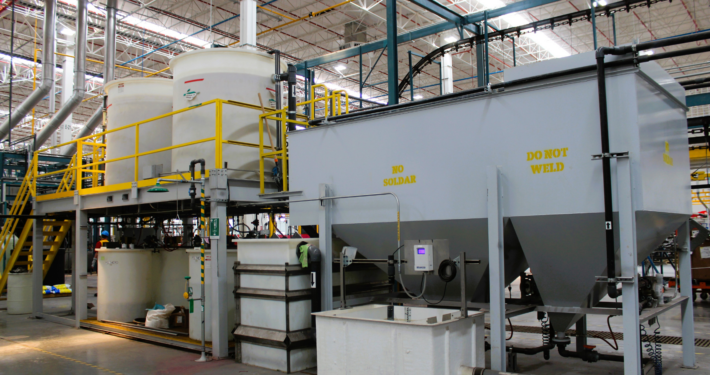
Most industrial wastewater treatment systems for metal finishing rely on chemical precipitation, pH adjustment, and solids separation. The process starts with pH adjustment. Adding lime or caustic soda raises the pH to a range where dissolved metals form insoluble hydroxide compounds. A coagulant then aggregates those compounds into larger particles that settle more efficiently. Clarification removes the settled solids from the liquid stream. The clarified effluent may then need additional filtration or polishing before it meets discharge limits. The solids collected from this process form a sludge. That sludge requires dewatering and disposal in line with applicable hazardous waste regulations. Some processes need additional pre-treatment steps before conventional precipitation can work. Cyanide destruction uses alkaline chlorination to oxidize cyanide to less harmful compounds. Chromium reduction converts hexavalent chromium to its trivalent form using a reducing agent such as sodium metabisulfite. Both steps must happen before the standard precipitation sequence begins.
Industrial Wastewater Treatment Design Factors That Affect Performance and Cost
The design of an industrial wastewater treatment system directly affects both treatment performance and operating cost. Several factors deserve close attention at the design stage. Flow rate variability is one of the most important. Finishing lines rarely generate wastewater at a constant rate. Production peaks, tank dumps, and batch rinse cycles all create surges. Equalization tanks buffer those surges by collecting and blending variable flows before they enter the treatment process. Without equalization, surges can overwhelm the treatment system and push effluent out of compliance. Chemical consumption is another significant cost driver. Overdosing pH adjustment chemicals wastes reagent and creates more sludge. Underdosing risks permit violations. Automated chemical dosing systems with feedback control from inline pH and ORP sensors reduce chemical waste while keeping treatment performance consistent. Sludge volume also warrants careful attention. Higher sludge volumes mean higher disposal costs. Systems that incorporate efficient solids separation and sludge dewatering equipment reduce the total volume requiring disposal. Over time, that reduction lowers operating costs considerably.
.
Water Reuse and Sustainability
Regulatory compliance sets the baseline obligation. Beyond that, many manufacturers now look at water reuse as a way to reduce operating costs and environmental impact. Finishing operations that recover and reuse rinse water lower their total water consumption. They also reduce wastewater volume and ease the load on their treatment systems. Reverse osmosis systems can recover high-quality water from treated effluent for reuse in rinse stages or process tanks. Counter-current rinsing techniques cut drag-out and reduce the volume of fresh water needed per production cycle. According to the Water Environment Federation, water reuse strategies in industrial settings consistently deliver measurable reductions in both consumption and discharge volumes. These approaches require additional capital investment upfront. However, reduced water and disposal costs typically offset that investment within a reasonable operating period.
Building an Industrial Wastewater Treatment System That Grows with Your Operation
Metal finishing operations change over time. New process lines get added. Production volumes increase. Regulatory requirements tighten. An industrial wastewater treatment system designed only for today’s conditions may struggle to handle tomorrow’s demands without significant modification.
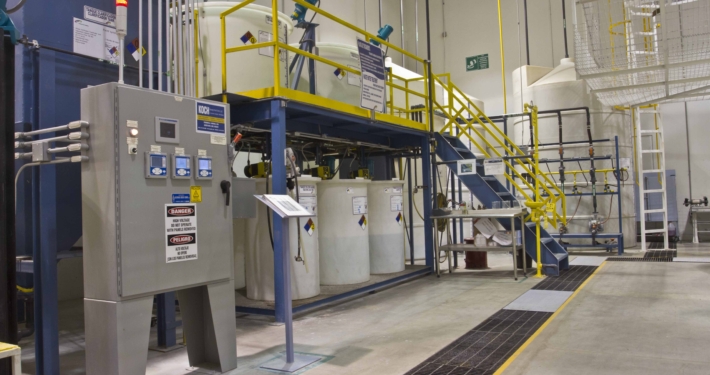
Scalability should factor into the design from the start. Modular treatment system designs allow capacity to expand in discrete steps. Control system architecture that accommodates additional instrumentation and process streams avoids costly rewiring during future expansions. Planning for growth at the design stage costs far less than retrofitting a system that was never built to scale.
.
KOCH Finishing Systems integrates wastewater treatment design into its turnkey finishing system projects. Treatment capacity, process chemistry compatibility, and regulatory compliance all factor into the overall system design from the beginning. To learn more about how KOCH approaches complete finishing system delivery, or to discuss your facility’s specific treatment requirements, contact us at KOCH Finishing Systems.


