
Turnkey Electrocoating Systems That Streamline Integrated Operations
Turnkey electrocoating systems are widely used across industries that require durable, corrosion-resistant finishes. Automotive components, agricultural equipment, construction machinery, and industrial products all rely on electrocoating to provide consistent surface protection across complex geometries.
Achieving consistent electrocoat performance requires more than individual pieces of equipment. Pretreatment systems, coating tanks, material handling, curing ovens, and process controls must operate as a coordinated system. For many manufacturers, managing these separate components can introduce inefficiencies, integration challenges, and operational risk.
Turnkey electrocoating systems address these challenges by delivering a fully integrated finishing solution. By combining engineering design, equipment fabrication, installation, and system controls under a single provider, turnkey electrocoating systems streamline operations and support long-term production reliability.
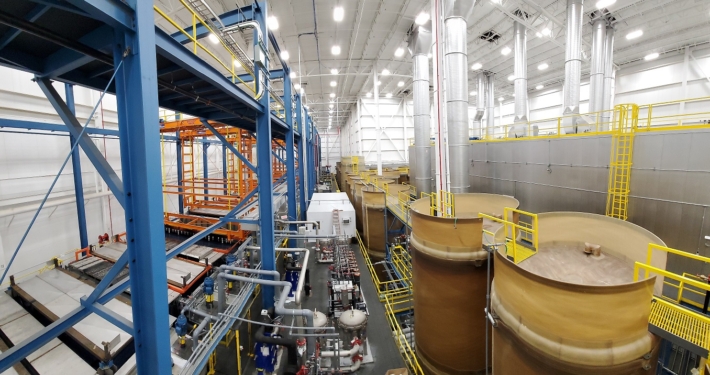
The Role of Integration in Electrocoating Operations
Electrocoating is a multi-stage finishing process. Each step—from cleaning and surface preparation to coating deposition and curing—must operate in sequence to maintain consistent coating performance.
Misalignment in any stage can affect coating quality, production throughput, or overall system efficiency. Inconsistent surface preparation may reduce coating adhesion, while poorly coordinated material handling can interrupt production flow.
Turnkey electrocoating systems solve this problem through a unified system design. Pretreatment equipment, coating tanks, filtration systems, and curing ovens operate as coordinated components rather than isolated pieces of equipment.
This coordinated system architecture improves part flow, strengthens coating consistency, and supports more predictable production performance.
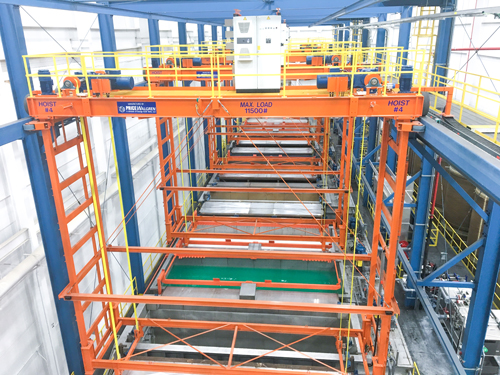
Engineering Pretreatment for Coating Performance
Pretreatment is one of the most critical stages of electrocoating. Proper surface preparation removes oils, contaminants, and oxidation that could interfere with coating adhesion.
In turnkey electrocoating systems, pretreatment stages are engineered specifically for the parts and materials being processed. This often includes a sequence of cleaning, rinsing, and chemical conversion steps designed to create a uniform surface condition before the electrocoating stage.
Because pretreatment directly influences coating performance, system design must ensure consistent chemical exposure, controlled spray coverage, and proper tank dwell times. Integrated system controls help maintain these parameters throughout production.
When pretreatment is engineered as part of the overall system, manufacturers can achieve more consistent coating adhesion and improved long-term corrosion resistance.
Coordinated Material Handling and Process Flow
Material handling plays a major role in the efficiency of electrocoating lines. Parts must move smoothly through each stage of the process while maintaining proper orientation and dwell time.
Turnkey electrocoating systems typically include automated material handling designed specifically for finishing operations. These systems guide parts through each stage of the process, including:
- Pretreatment stages that prepare surfaces for coating adhesion
- Electrocoating tanks where coating is deposited evenly across part surfaces
- Rinse stages that remove excess material and maintain bath quality
- Curing ovens that complete the coating process under controlled thermal conditions
Automated conveyor systems operate at carefully controlled speeds to maintain consistent dwell times throughout the finishing line.
Key advantages of integrated material handling include:
- Stable part positioning that supports uniform coating deposition
- Controlled line speeds that allow each process stage to operate correctly
- Consistent throughput, which helps maintain steady production flow
When material handling is designed as part of the overall system architecture, manufacturers maintain reliable production flow and reduce operational interruptions.
Process Control and Monitoring
Electrocoating performance is reliant on maintaining stable process parameters. Voltage levels, bath chemistry, temperature conditions, and filtration performance must all remain within defined ranges. Modern turnkey electrocoating systems incorporate advanced control systems that monitor these parameters in real time.
Specifically, components like Automatic Average Current Density (AACD) controllers precisely regulate rectifier voltage at the part level. This ensures consistent paint film thickness and improved coating uniformity, even when mixed part sizes enter the tank at different times. This level of visibility and automated adjustment supports preventive maintenance and gives manufacturers greater confidence in the overall stability and reliability of their finishing operations.
Process monitoring also supports preventive maintenance and early detection of performance changes. When systems provide clear operational data, engineers can identify trends and address potential issues before they affect coating quality or production output. This level of visibility gives manufacturers greater confidence in the stability and reliability of their finishing operations.


